 In today’s digital-first era, every click matters. Your business may have a great-looking website and engaging content — but if search engines can’t crawl, index, or understand it properly, it won’t reach your target audience.
That’s where Technical SEO comes in. It’s the foundation that ensures your website runs efficiently, loads fast, is secure, and is fully accessible to both users and search engines, even those utilizing complex JavaScript rendering.
At Shriasys, we help businesses strengthen their online presence with end-to-end Technical SEO solutions — from performance optimization and structured data to crawl audits and Core Web Vitals improvement.
1. What is Technical SEO?
Technical SEO refers to optimizing a website’s backend and structure so that search engines can efficiently crawl, index, and understand its content. It’s the technical foundation that supports all other SEO efforts—content, backlinks, and digital marketing.
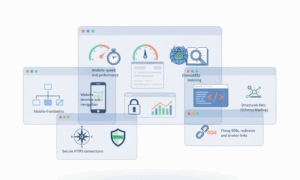
Key elements of Technical SEO:
- Website speed and performance
- Mobile-friendliness
- Crawlability and indexing
- Website structure and navigation
- Secure HTTPS connections
- Structured data (Schema Markup)
- JavaScript SEO (ensuring Google can render dynamic content)
- Fixing 404s, redirects, and broken links
2. Why Technical SEO Matters for Businesses
A technically optimized website performs better, ranks higher, and converts more effectively.
Top Benefits of Technical SEO:
- Improved Search Visibility – Better crawlability and indexing mean your pages appear for relevant searches.
- Enhanced User Experience – Fast and responsive sites keep visitors engaged.
- Higher Conversion Rates – Fewer errors and smoother performance build trust.
- Better ROI from Digital Marketing – Ensures your marketing campaigns perform efficiently.
- Long-Term Stability – A clean, secure, and scalable website foundation supports future growth.
3. Website Speed Optimization
Speed is a key ranking and user experience factor. A slow website frustrates users and increases bounce rates.
How to Optimize Page Speed:
- Compress and resize images (use WebP or AVIF)
- Use a CDN (Content Delivery Network) for faster global delivery
- Minify CSS, JavaScript, and HTML
- Enable browser caching and lazy loading
- Optimize server response time (TTFB ideally under 600ms, aiming for the lowest possible).
- Avoid heavy plugins and excessive scripts
Pro Tip: Use Google PageSpeed Insights and GTmetrix to measure your site’s loading performance.
4. Mobile Optimization: Adapting to Mobile-First Indexing
With Google’s mobile-first indexing, your site’s mobile version determines how it ranks.
Checklist for Mobile Optimization:
- Use responsive web design
- Optimize buttons and menus for touch screens
- Maintain proper font size and spacing
- Avoid intrusive pop-ups that degrade the mobile experience
- Test usability with Google’s Mobile-Friendly Test
Business Benefit: A mobile-optimized site attracts more visitors, improves retention, and strengthens your local SEO.
5. Crawlability and Indexing: Helping Search Engines Understand Your Site
Crawlability ensures that search engine bots can access your web pages without obstacles. Indexing ensures those pages are stored and available for search results.
Best Practices:
- Create and submit an XML Sitemap
- Use robots.txt to guide search bots and manage crawl budget
- Set canonical URLs to avoid duplicate content issues
- Check indexing coverage in Google Search Console
- Fix crawl errors and redirect loops
Tools: Google Search Console, Screaming Frog, and Sitebulb
6. Website Architecture: Organize for Users and Bots
Tips:
- Use intuitive, shallow navigation (The ‘3-Click Rule’ is a good guideline, but focus on logical linking).
- Use breadcrumbs and structured menus
- Interlink related pages for better crawl flow and authority distribution
- Use clear, keyword-rich URLs
7. HTTPS and Website Security
Steps:
- Install an SSL certificate
- Redirect all HTTP URLs to HTTPS
- Update internal links and canonical tags to HTTPS
- Fix mixed content warnings
8. Fixing Technical Errors
Small technical issues can harm rankings over time. Regular audits are essential.
Common Errors to Fix:
- Broken links (404 pages)
- Duplicate content
- Missing canonical tags
- Incorrect redirects (use 301 for permanent changes, not 302)
- Orphan pages (unlinked URLs)
- Missing or incorrect Hreflang tags (for multilingual sites)
Tools to Detect Issues: Screaming Frog SEO Spider, Ahrefs Site Audit, Google Search Console.
9. Structured Data and Schema Markup
Schema helps search engines interpret the meaning of your content and display rich snippets (ratings, reviews, events).
Popular Schema Types:
- Local Business & Organization
- FAQ & How-To
- Product & Review
- Article & Blog Posting
Tools: Google’s Rich Results Test, Schema.org Markup Generator.
Benefit: Rich snippets attract higher CTR (Click-Through Rate) and improve your brand’s SERP visibility.
10. Core Web Vitals: Enhancing User Experience
Google’s Core Web Vitals measure user-centric aspects of performance and are critical ranking signals.
Metrics:
- LCP (Largest Contentful Paint): Measures loading time (Goal: <2.5s)
- CLS (Cumulative Layout Shift): Measures visual stability (Goal: <0.1)
- INP (Interaction to Next Paint): Measures interactivity and responsiveness. This metric is replacing FID in March 2024 (Goal: <200ms)
- Tools to Monitor: Google PageSpeed Insights, Lighthouse, Web Vitals Chrome Extension.
Benefit: Meeting Core Web Vitals improves both search rankings and customer satisfaction.
11. Tools to Audit Technical SEO and Find Gaps
- Google Search Console (Free)
- Gap it Finds: Missing pages, crawl errors, mobile issues, sitemap conflicts.
- Google PageSpeed Insights / Lighthouse (Free)
- Gap it Finds: Slow scripts, large images, poor caching, layout shifts, INP issues.
- Screaming Frog SEO Spider (Freemium)
- Gap it Finds:Metadata issues, crawl depth problems, 404 errors, canonical and Hreflang setups. (The free version crawls up to 500 URLs per crawl)
- Ahrefs / SEMrush (Paid)
- Gap it Finds: Comprehensive technical and on-page issues, broken backlinks, crawlability flaws.
- Chrome DevTools
- Gap it Finds: Render-blocking scripts, unused CSS, slow network resources, JavaScript rendering diagnostics.
12. Common Technical SEO Mistakes to Avoid
Avoid these frequent pitfalls to maintain a healthy SEO foundation:
- Ignoring HTTPS implementation.
- Missing canonical tags or knowingly allowing duplicate content.
- Blocking key pages in robots.txt.
- Failing to optimize for mobile users.
- Having long redirect chains (keep them to a single hop: A > B).
- Over-relying on JavaScript without server-side rendering or proper hydration.
13. Shriasys — Your Partner for Technical SEO Success
At Shriasys, we specialize in providing complete Technical SEO and digital marketing solutions tailored to your business needs.
Our Expertise Includes:
- Technical SEO audits & gap analysis
- Core Web Vitals and page speed optimization (including INP implementation)
- Schema and structured data setup
- Mobile-first and responsive design improvements
- Secure HTTPS migrations
- Ongoing site monitoring & analytics
With years of experience in website development, SEO, and hosting, we ensure your website is technically sound, scalable, and ready to dominate search rankings.
14. The Future of Technical SEO
Technical SEO continues to evolve with advancements in AI, machine learning, and automation.
Trends to Watch:
- Enhanced Core Web Vitals standards (like the shift to INP)
- Server-side rendering (SSR) for JavaScript-heavy sites becoming standard.
- Automated schema implementation and real-time indexing APIs
- AI-based auditing tools for instant gap detection
Businesses that invest in Technical SEO now will future-proof their online visibility and performance.
Conclusion
Technical SEO is the foundation of online success. It ensures your website is fast, secure, mobile-friendly, and fully optimized for both users and search engines.
If your site struggles with performance, crawl issues, or poor indexing, Shriasys can help you transform it into a high-performing website.
From detailed audits to speed optimization and structured data setup, we make your website technically perfect and business-ready.
Improve your visibility with Shriasys – your trusted website partner for Technical SEO and website development.