
How Understanding Your Audience Transforms Conversions, Reduces Ad Costs, and Builds Digital Trust
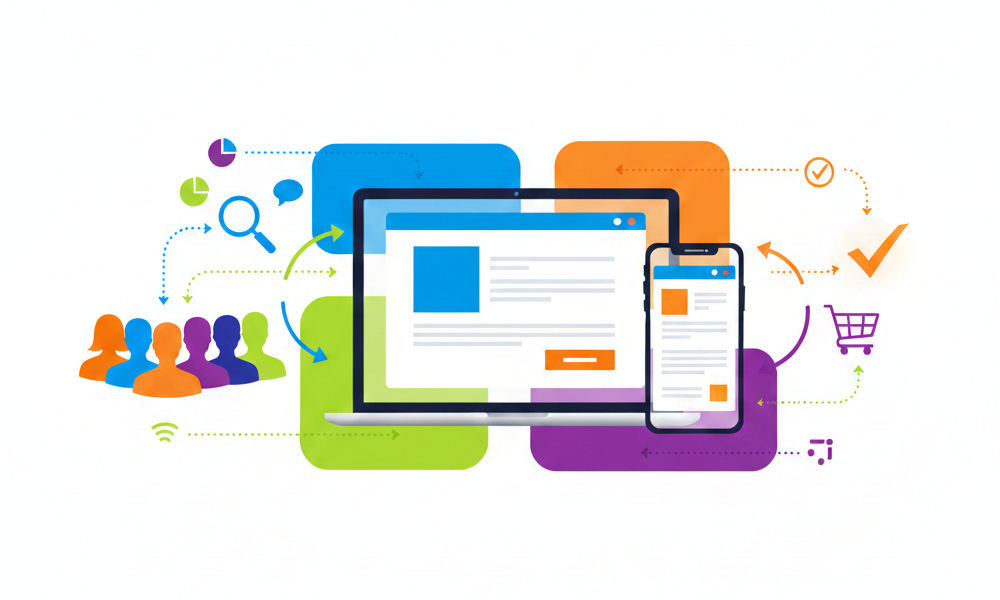
In the fast-paced digital economy, businesses have mere seconds to capture a visitor’s attention, communicate value, and inspire action. Whether you are promoting SEO Services, launching a new product, advertising through Google Ads, or inviting users to book a consultation, your success usually depends on a highly focused digital asset: the landing page.
Unlike a traditional website page that tries to inform, educate, and entertain, a landing page serves one powerful purpose—conversion. It channels the visitor toward a single action, eliminating distractions and maximizing results. But a landing page becomes truly effective only when designed with a deep understanding of its target audience.
This article explores the real importance of landing pages, why target audience matters, and how aligning these two elements can significantly influence business growth—especially for service-based companies, ecommerce brands, and digital-first businesses like WordPress Development Companies, Digital Marketing Agencies, and Ecommerce Website Developers.
What is a Landing Page?
A landing page is a standalone web page created with a single goal:
Convert visitors into customers, leads, or subscribers.
It is the destination where people land after clicking an ad, search result, email link, or social media post. The landing page acts as a digital sales representative—focused, persuasive, and completely aligned with user intent.
Key Characteristics of a Landing Page
- One message
- One offer
- One Call-to-Action (CTA)
- No unnecessary navigation
- No external distractions
While regular website pages like Home, About, and Services serve multiple purposes, landing pages eliminate all noise and drive one outcome.
Why Landing Pages Matter in Modern Marketing
Landing pages play a crucial role across every industry—from healthcare and education to local businesses, ecommerce, and service companies. The rise of digital platforms means users expect faster answers and clearer offerings. They don’t want to browse endlessly; they want a page that understands them instantly.
Below are the core reasons why landing pages have become essential for brands using digital marketing strategies, including those offering services like SEO Optimization, WordPress Website Development, and Local Business Promotion.
They Increase Conversion Rates
A landing page converts better than a regular webpage because it removes everything unnecessary. When a visitor lands on a page designed specifically for them, the likelihood of action increases dramatically.
Imagine running Google Ads for “Tiles Company in Chennai” or “Wet Grinder Online Store.”
Sending users to your website homepage forces them to search, click and explore. Most won’t.
A dedicated landing page solves this problem.
“People don’t buy when they are confused. A landing page removes confusion and speeds up decision-making.”
They Improve Ad Performance and Reduce Cost
Platforms like Google, Facebook, LinkedIn, and Instagram judge landing page experience when deciding:
- Ad quality
- Cost per click
- Conversion cost
Better landing pages =
👉 Higher Quality Score
👉 Lower Cost per Lead
👉 Increased ad visibility
Businesses using Shriasys Digital Marketing Services often witness improved ad performance simply by using customized landing pages for each campaign.
They Match User Intent Much Better
Most website pages talk generally about all services or products. But landing pages talk directly to the need behind the click.
| User Intent | Landing Page Focus |
|---|---|
| “SEO Packages for Small Businesses” | Simple pricing, features, benefits |
| “WordPress Website Developer” | Portfolio, process, platform expertise |
| “Paediatric Hospital Near Me” | Child-friendly facilities, emergency care |
| “Ecommerce Website Developer” | Store features, payment gateways, speed |
Landing Pages Build Trust Faster
In a world overflowing with information, trust has become the digital currency.
Landing pages help build trust using:
- Testimonials
- Ratings
- Case studies
- Before/after visuals
- Certifications
- Statistics
- Process clarity
A visitor who sees clear proof and relevance stays longer. This is why businesses often connect their project highlights, reviews, and guarantees on landing pages – similar to how Shriasys Portfolio Pages build confidence among potential clients.
They Create a Laser-Focused Sales Journey
The success of good landing pages hinges on one critical factor: simplicity. By adopting a minimalist approach, a landing page eliminates distractions and cognitive friction, creating a single, laser-focused path for the user.
- Click the Ad: The user arrives with a specific expectation, driven by the ad’s message.
- Read the exact solution: The page immediately validates the user’s need by presenting the relevant offer, confirming they’re in the right place.
- See proof: Credibility is instantly established through testimonials, social proof, or data, removing doubt and building trust.
- Take action: The call-to-action (CTA) becomes the natural, inevitable next step in the established sequence.
- Stay Ahead with Goodfirms: Showcase key projects to help potential clients understand your expertise.
Understanding the Target Audience
A landing page becomes truly powerful and effective only when you have a clear understanding of who you are creating it for. Simply having a well-designed page is insufficient; its success hinges entirely on its relevance to the prospective customer.
A target audience is a precisely defined group of people who share characteristics that make them ideal customers.
Specifically, this group:
- Need your product/service: They have a genuine, identifiable problem your solution can solve.
- Are likely to take action: They are motivated and ready to convert, not just casually browsing.
- Share similar pain points: They experience common frustrations that your copy can directly address.
- Respond to specific benefits: They are motivated by particular value propositions that resonate with their needs.
- Search for similar solutions: They use common language and platforms when seeking a fix for their problem.
Ignoring this principle is fatal to conversion, as illustrated by the examples: A hospital’s landing page, with its focus on medical services and patient care, will entirely fail to appeal to a real-estate buyer. Similarly, a tiles company’s page, focused on construction materials and aesthetics, will not convert a digital marketing client whose interests are entirely service-based.
Components of a Target Audience
To design landing pages that convert, businesses must know the following:
Demographics
Demographics are the statistical data relating to the population and specific groups within it. They provide the fundamental characteristics of who the customer is.
Key Factors: Age, gender, profession, income, education level, and marital status.
Impact on Design: This information helps determine the appropriate complexity of language, pricing expectations, and the relevancy of imagery.
Example: “Parents searching for child-safe hospitals.”
Location
Location information pinpoints the audience geographically and culturally, enabling hyper-local relevance.
Key Factors: City, region, local language preferences, and cultural norms.
Impact on Design: Location determines the practicality of the offer (is it physically accessible?) and allows for localization, which builds immediate trust.
Example: “Tiles showroom in Chennai,” “Wet grinder delivery in Tamil Nadu.”
Psychographics
Psychographics delve into the audience’s mental and emotional landscape, revealing their motivations and expectations.
Key Factors: Personality, values, attitudes, interests, lifestyle, and trust triggers.
Impact on Design: This determines the aesthetic quality and functionality required to build credibility.
Example: Tech-savvy users expect modern design, fast load time, and clear specs.
Pain Points
Pain points are the specific problems, frustrations, or desires the audience is trying to resolve. Addressing these directly is the core function of the landing page copy.
- Key Factors: The actual problem they are trying to solve and the emotional drivers behind the search.
Impact on Design: Copy must be benefit-focused, not feature-focused. It must validate the user’s struggle immediately.
Example:- A business owner visiting an SEO Services landing page wants leads, not technical jargon.
- A parent visiting a hospital landing page wants safety and expert doctors.
Buying Intent
Buying intent measures the audience’s readiness to make a purchase or take a conversion step. It defines the necessary depth and urgency of the content.
Key Factors: Are they in the comparing, deciding, or purchasing now stage?
Impact on Design: Understanding intent determines three critical elements:
- CTA text
- Level of detail
- Content tone
By analyzing these five components, a business can create a landing page that is highly relevant, trustworthy, and precisely engineered to convert its ideal customer.
Why Target Audience Matters for Landing Pages
The fundamental truth of high-converting web design is that aligning your landing page with your audience’s expectations is the ultimate formula for success.
It Creates Instant Relevance
Users leave when a page feels unrelated.
They stay when they feel:
“This is exactly what I’m looking for.”
Take these examples:
- Someone searching “WordPress Website Developer in India” should instantly see:
- WordPress expertise
- Portfolio
- Plugins used
- CMS features
- Delivery timeline
- Someone searching “WordPress Website Developer in India” should instantly see:
- Someone searching “SEO Services for Doctors” should see:
- Medical keyword strategy
- Local SEO
- Healthcare content writing
- Google My Business optimization
- Someone searching “SEO Services for Doctors” should see:
Relevance increases trust and action.
It Helps You Speak Their Language
A parent, a business owner, and a student interpret content differently. Tone must match audience expectations.
Incorrect Tone Example (for hospitals):
“Enhance your medical operational efficiency using systematic protocols.”
Correct Tone:
“Safe, reliable care for your child – 24/7 paediatric specialists.”
By analyzing your audience, Digital Marketing Teams rewrite landing pages in user-friendly language that drives results.
It Solves Their Exact Problems
When you know pain points, you can create persuasive content.
Examples:
- SEO landing pages should speak about low traffic, poor ranking, and low visibility.
- Ecommerce developer pages should discuss speed, payments, and user experience.
- Tiles companies should highlight durability, design, and cost.
- Wet grinder product pages should focus on motor strength, drum capacity, and warranty.
It Builds Trust and Authority
Users trust pages that “feel like they understand me.”
Trust elements include:
- Case studies
- Reviews
- Certifications
- Before/after statistics
- Real success stories
For example, We highlight:
- Clients using our SEO Services
- WordPress websites launched
- Ecommerce stores with high conversions
This has build our credibility.
It Helps Define the Right CTA
Your audience determines your CTA.
| Audience Type | Best CTA |
|---|---|
| Shoppers | Buy Now |
| Local service users | Book Appointment |
| SaaS users | Start Free Trial |
| Business owners | Request a Quote |
| Students | Register Today |
How Landing Pages & Target Audience Work Together
Landing pages and target audience are not separate strategies – they are interconnected. A landing page is the message. The audience decides the tone, structure, offer, and proof.
Below is a table summarizing the synergy:
| Landing Page Element | Influence of Target Audience |
|---|---|
| Headline | Reflects their strongest need |
| Visuals | Shows people similar to them |
| Offer | Matches their urgency |
| Benefits | Solves their pain points |
| Language | Professional / simple / emotional |
| Page design | Depends on how fast they decide |
| CTA | Based on action they are ready to take |
Best Practices for High-Conversion Landing Pages
Although landing pages vary across industries, a few universal principles apply.
Clear, Strong, Audience-Focused Headline
The headline must answer the visitor’s most urgent question:
“What’s in it for me?”
Use Benefits-not Features Alone
Example (SEO Services):
Feature: Keyword research
Benefit: Attract customers who are already looking for your services.
Keep One Call-to-Action
Multiple destinations confuse users.
One CTA increases clarity.
Social Proof Works Wonders
Testimonials, reviews, and real-world results build credibility instantly.
Mobile-First Design
Most landing page traffic comes from mobile.
Fast and responsive pages convert best.
Reduce the Form Fields
Shorter forms = higher conversions.
Use Visuals That Reflect Your Audience
A hospital page requires comforting images.
A WordPress developer page needs screenshots, UI elements, and dashboards.
Frequently Asked Questions
A landing page is designed to focus on a single action such as lead generation, sales, or appointment booking. Unlike regular website pages, it eliminates unnecessary navigation and distractions to increase conversions.
A normal webpage provides general information about your business, while a landing page is highly focused on one message, one offer, and one Call-to-Action. It is built to convert visitors into customers or leads quickly.
Knowing your target audience helps you create landing pages with the right tone, message, visuals, and CTA. When the content reflects their exact needs and pain points, visitors convert faster.
Yes. Google rewards ad campaigns that send users to relevant landing pages. Better relevance increases Quality Score, lowers cost-per-click, and improves overall campaign ROI.
Indirectly, yes. Landing pages created with specific keywords can rank for niche search terms. They also increase user engagement, reduce bounce rate, and support SEO-focused services like those offered by Shriasys.
Successful businesses usually create multiple landing pages—one for each service, offer, audience segment, or advertising campaign. The more relevant and specific your pages are, the better your conversions.
A strong headline, clear benefits, relevant visuals, social proof, simple forms, and a single, powerful CTA are the key elements of a high-converting landing page.
Absolutely. Local businesses such as hospitals, tiles stores, or service providers can use location-targeted landing pages to attract local customers and improve regional visibility.
Yes. Ecommerce brands use product-specific landing pages to highlight features, benefits, reviews, and offers—dramatically increasing sales, especially when used with paid ads.
Definitely. Most visitors browse on mobile phones, and a slow or poorly designed mobile landing page leads to high bounce rates. A mobile-first design is essential for conversions.
Why They Truly Matter
Landing pages and target audiences are two sides of the same coin.
One delivers the message.
The other decides how the message must be crafted.
A landing page without a clearly defined audience may look attractive but will never convert effectively. A target audience without a dedicated landing page will never receive the targeted communication required to take action.
“When businesses understand their audience, landing pages become powerful tools—not just web pages.”
If your business wants:
-
- More leads
- More calls
- More sales
- Better ROI
- Lower ad cost
- Stronger online presence
Then focusing on smart landing pages tailored to the right audience is the single most effective strategy.