
Every table that gets booked because someone searched “best restaurant near me” was won or lost before they ever saw your menu.
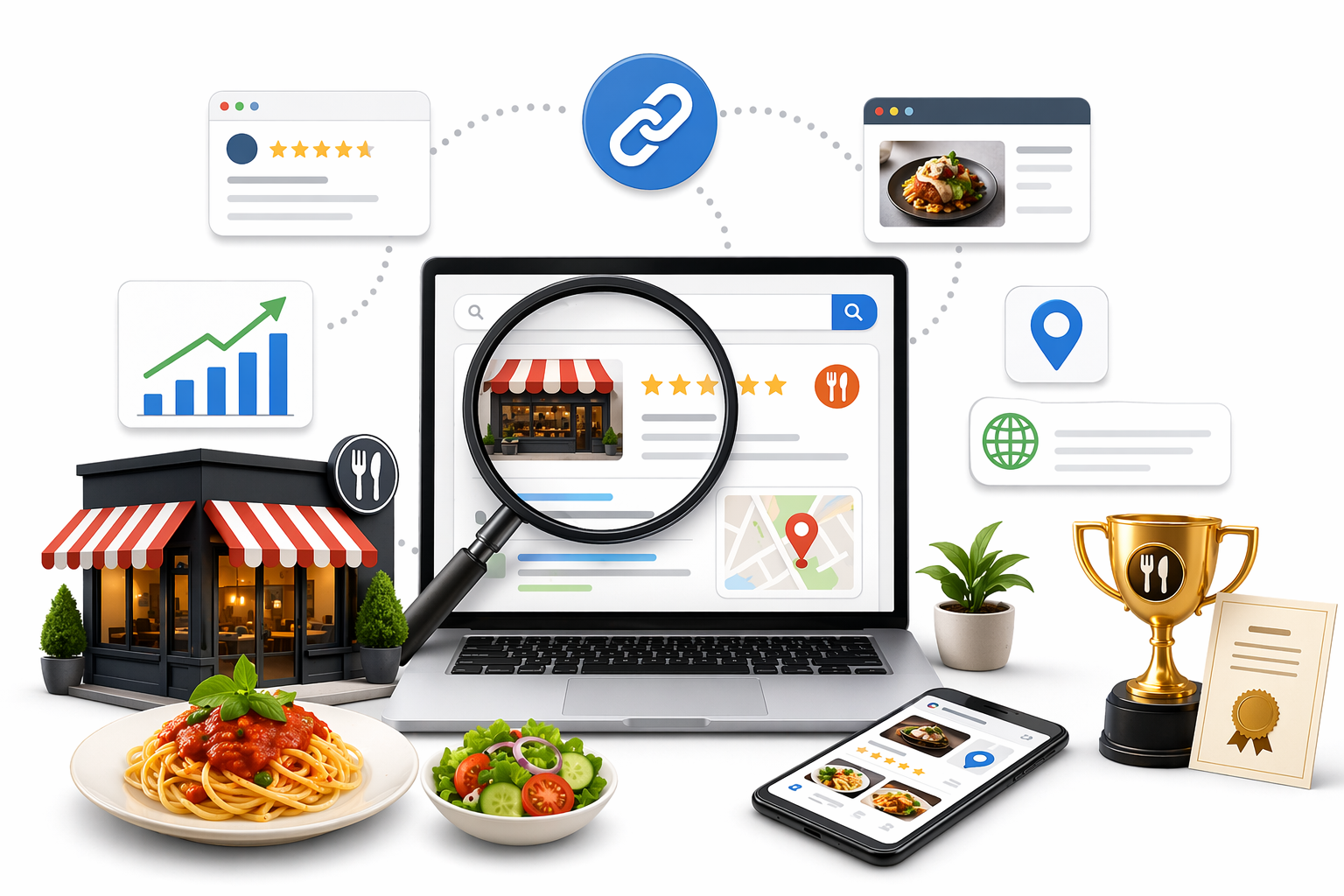
Hunger used to send people to familiar places. The restaurant their family always went to, the dhaba they passed on their commute, the place a colleague mentioned last week. Habit and word of mouth were the only algorithms that mattered.
That world still exists. But it now runs parallel to a different one. Before a family decides where to celebrate a birthday, they search. Before a couple picks a restaurant for an anniversary dinner, they look it up. Before a group of colleagues chooses a lunch spot in a new part of the city, they type something into Google and click the first three results that look credible.
In this parallel world, the restaurants that win are not necessarily the best. They are the ones that Google trusts enough to rank prominently — and Google’s trust, in the food sector more than almost anywhere, is built through backlinks.
This guide explains how restaurants, cloud kitchens, QSR chains, catering businesses, food product brands, and specialty food retailers can build the SEO authority that keeps their tables full, their orders coming, and their digital presence working as hard as their kitchen does.
Why Backlinks Are the Hidden Ingredient in Restaurant SEO
The Search Journey Starts Long Before the Booking
A diner searching for “best biryani in Coimbatore” or “rooftop restaurants in Chennai” is not making a casual enquiry. They have a meal in mind, a budget in consideration, and a decision to make within the next few minutes. The restaurant that appears at the top of those results — and is reinforced by mentions in food blogs, city guides, and local news — captures that diner almost certainly.
The restaurant three positions below loses them to a competitor. In food service, where margins are tight and fixed costs are constant, the difference between a full dining room and an empty one is the difference between profitability and survival. Organic search rankings, driven by backlink authority, are not a marketing luxury for restaurants. They are a commercial necessity.
The Aggregator Dependency Problem
Most restaurants in India generate their online bookings and orders through aggregators: Zomato, Swiggy, Dineout, EazyDiner. These platforms are extraordinarily convenient for customers, and they provide genuine discovery value. But they extract a significant cost: thirty percent commissions on delivery orders, listing fees, and — most critically — the customer relationship itself.
A customer who finds a restaurant through Zomato becomes Zomato’s customer as much as the restaurant’s. Their data, their loyalty, and their next order all flow through the aggregator’s platform. The restaurant that builds strong organic search authority, driving bookings directly to its own website, owns that customer relationship. The commission saved on a direct booking is pure margin. Over hundreds of bookings a month, the economics are transformative.
Backlinks are the foundation of that direct traffic. They build the search authority that makes a restaurant discoverable outside of aggregator platforms — reaching the diners who are searching on Google rather than browsing on Zomato.
The Commission Maths
A restaurant doing fifty delivery orders a day through Zomato at an average order value of Rs. 400 pays approximately Rs. 6,000 per day in commission at a thirty percent rate — Rs. 1,80,000 per month. Even a partial shift of that volume to direct orders, driven by organic search authority, represents a meaningful improvement in profitability. Backlink building is not just an SEO expense. It is an investment in reducing distribution cost.
Food Is One of the Internet’s Most Link-Generous Categories
Food content is among the most produced, most shared, and most linked-to material on the internet. Food bloggers publish recipe posts and restaurant reviews daily. Lifestyle journalists cover culinary trends weekly. City guides recommend dining destinations constantly. Travel writers include restaurant sections in every destination piece. Corporate event planners compile catering vendor lists. Wedding blogs feature food and catering providers prominently.
The food and restaurant industry sits inside one of the richest linking ecosystems on the internet. The challenge for any food business is not finding opportunities to earn backlinks — it is identifying which opportunities carry genuine SEO authority and pursuing them with the consistency that builds lasting rankings.
The Best Sources of High-Value Backlinks for Food Businesses
Food Bloggers and Culinary Content Creators
Food bloggers are the most natural and prolific source of backlinks for restaurants and food businesses. A well-written restaurant review on an established food blog — complete with photography, a detailed account of the experience, and a link to the restaurant’s website — creates a backlink that continues passing authority and attracting readers for years after publication.
India’s food blogging ecosystem is enormous and geographically distributed. Every major city has its community of respected food bloggers — writers with substantial local followings who function as trusted curators for their audiences. A mention from a blogger whose readers trust their restaurant recommendations in Coimbatore carries more local authority than a listing in a generic national food directory.
Building relationships with the ten or fifteen most credible food bloggers in a restaurant’s city, and ensuring each has visited and written about the restaurant, creates a backlink foundation that most competitors have not built. Blogger invitations, media dinners, tasting events, and exclusive preview evenings are all mechanisms for earning these backlinks while simultaneously generating word-of-mouth among the city’s most engaged food community.
City Food and Lifestyle Guides
Every city with a meaningful dining scene has an ecosystem of food and lifestyle guide platforms. These range from established publications like Conde Nast Traveller’s restaurant guides and Times Food’s annual listings to local platforms like Burrp, Dineout’s editorial content, and city-specific food discovery sites. Being listed, ranked, or featured on these platforms produces backlinks from domains with strong food-specific authority.
The distinction that matters is between a simple directory listing — which may produce a weak or nofollow link — and an editorial feature, which produces a genuine, authority-passing backlink embedded within content that real readers engage with. Restaurants that pitch interesting stories, notable dishes, or distinctive experiences to the editorial teams of these platforms earn features. Those that simply exist in a database earn listings.
Local and National News Coverage
Restaurant news is a reliable category for local and national media. A new restaurant opening, a notable chef appointment, a unique culinary concept, a heritage recipe revival, a sustainability initiative, a record-breaking dish, a pop-up collaboration — each is a potential news story. Food journalists at publications like The Hindu, Times of India, Deccan Chronicle, and their digital properties actively seek these stories.
A restaurant that issues well-crafted press releases for genuinely newsworthy moments — not routine operational updates, but actual editorial stories — builds a media relationship that produces consistent coverage and the backlinks that accompany it. A single feature in a national food publication can produce a backlink worth more than a hundred generic directory submissions.
Regional and city-specific news platforms are equally valuable for neighbourhood restaurants and local food businesses. Coverage in the Coimbatore edition of a major Tamil newspaper, or a feature in a city-specific news portal, builds the local authority that drives rankings for the hyperlocal searches where most restaurant discovery happens.
Food Awards and Recognition Programmes
Restaurant award programmes are a systematically underutilised backlink source. The Times Food & Nightlife Awards, Zomato’s Restaurant of the Year, Conde Nast Traveller’s Best Restaurant listings, NCSI’s hospitality certifications, state tourism department restaurant recognitions, and international programmes like Asia’s 50 Best Restaurants all generate backlinks from their awarding organisations’ websites when they recognise a restaurant.
Award-winning restaurants also receive coverage from food journalists who report on the results, producing additional earned media backlinks from news publications and food platforms. Submitting for relevant awards and proactively seeking certifications is therefore not just a prestige exercise — it is a structured approach to earning backlinks from authoritative sources.
Even local and regional awards carry significant local SEO authority. A “best biryani in Coimbatore” award from a local food publication, with a published feature and a website link, contributes meaningfully to rankings for exactly the search term that brings in biryani-seeking diners.
Food and Travel Publications
Culinary tourism is a significant content category in food and travel journalism. Publications that cover food destinations — including BBC Good Food India, National Geographic Traveller India, Outlook Traveller’s food coverage, and food-specific platforms like Saveur — write extensively about restaurants and food experiences worth seeking out. These features reach audiences who are actively planning to visit a destination and want to eat well while there.
For restaurants in tourist destinations or cities with a strong culinary identity, earning features in travel-food publications creates backlinks from domains with both high authority and a deeply relevant audience. A restaurant in Pondicherry featured in a piece on the city’s French Creole food heritage, or a Chettinad restaurant in Karaikudi featured in a culinary tourism guide to Tamil Nadu, earns backlinks that reach travellers at precisely the moment they are planning their visit.
Restaurants & QSRs
• Food blogger reviews
• City food guide features
• Local news restaurant coverage
• Food awards & certifications
• Wedding catering directories
• Corporate event vendor lists
• Neighbourhood community sites
• Food delivery platform editorials
Cloud kitchens & delivery brands
• Food tech media features
• Startup & business press
• Packaging sustainability blogs
• Zomato & Swiggy editorial picks
• Food entrepreneur communities
• FSSAI certification listings
• Health & diet blog mentions
• Social commerce platform links
Food product brands & retailers
• Food & recipe blogger links
• Health & nutrition publications
• Grocery & specialty retailer features
• Gift guide placements
• Artisan food marketplace listings
• Export promotion board portals
• APEDA & GI tag directories
• Food fair & exhibition coverage
Wedding and Events Catering Platforms
Catering is a high-value, high-intent segment of the food business, and the platforms that serve it are an underutilised backlink source. Wedding planning platforms, corporate event directories, MICE catering vendor lists, and event management company partner pages all maintain links to their recommended catering providers.
A restaurant or catering business that is listed as a preferred vendor on WedMeGood, ShaadiSaga, or a network of event management companies earns backlinks from platforms with strong domain authority and an audience with immediate booking intent. Wedding catering searches are among the highest-value food service queries on Google, and appearing in the platforms that serve those searches builds authority that extends beyond catering into the restaurant’s general local SEO.
Health, Nutrition, and Lifestyle Platforms
The intersection of food and health is one of the most searched topics on the internet. Restaurants with a genuine health focus — plant-based menus, diabetic-friendly options, calorie-counted meals, Jain cuisine, organic ingredients, or therapeutic diet catering — have access to a rich ecosystem of health and nutrition blogs, lifestyle platforms, and wellness publications that actively link to food businesses aligned with their editorial focus.
A restaurant that has developed a medically-endorsed diabetic meal programme, or a cloud kitchen specialising in post-surgical recovery diets, can earn backlinks from health portals, hospital wellness blogs, and nutrition professional associations that are entirely unavailable to a general-menu restaurant. These niche authority backlinks reach audiences with specific dietary needs — exactly the customers most likely to become loyal, recurring visitors.
Corporate and Institution Dining Features
Restaurants and catering businesses that serve corporate clients, educational institutions, hospitals, or government bodies are eligible for listing on procurement portals, corporate catering directories, and institutional vendor registers. These listings often include website links that carry the authority of the linking organisation’s domain.
A catering company listed as an approved vendor for a major IT park in Chennai, or a cloud kitchen registered as a tiffin supplier for a hospital staff cafeteria, may receive a backlink from the institution’s procurement page or vendor directory. These corporate and institutional backlinks carry strong domain authority and reach an audience — HR managers, facilities teams, procurement officers — that is actively seeking reliable food supply partners.
Local SEO for Restaurants: The Backlinks That Fill Tables Tonight
For restaurants, local search is not one dimension of SEO — it is the primary battlefield. A diner does not search for “best South Indian restaurant.” They search for “best South Indian restaurant in RS Puram” or “idli restaurant open now near me.” Every meaningful restaurant search is a local search, and local SEO authority is what determines who wins it.
Local backlinks — from geographically relevant sources — are the most commercially direct SEO investment a restaurant can make. They do not just improve rankings in abstract. They fill tables on Friday night.
Neighbourhood and Community Platforms
Hyperlocal community platforms, neighbourhood Facebook groups that maintain curated resource lists, apartment complex notice boards with vendor sections, and local WhatsApp community directories are not traditional backlink sources. But when they publish web-based content — a list of the best tiffin services in a neighbourhood, a community guide to local delivery options, a compilation of restaurants that deliver to a specific pin code — the links they include carry genuine local authority signals.
Actively engaging with these community platforms and ensuring the restaurant is correctly represented in local community resource lists builds a hyperlocal citation profile that larger chain restaurants, focused on city-wide or national visibility, typically neglect.
Local Chamber and Business Association Listings
Chambers of commerce, trade associations, local business networks, and city merchants’ associations maintain member directories that include website links. For restaurants, membership in the local hospitality association or restaurant owners’ guild — bodies like the National Restaurant Association of India’s state chapters or city-specific hotel and restaurant associations — provides both a credible directory backlink and access to collective media relationships that generate additional coverage opportunities.
Real Estate and Relocation Guides
Platforms that help people relocating to a new city — expat guides, relocation company resource pages, housing society welcome kits, and new resident guides — often include curated lists of recommended local restaurants and food services. These backlinks reach an audience at a particularly receptive moment: people who have just moved to a neighbourhood and are actively forming their local dining habits. A backlink from a relocation guide to a restaurant is not just an SEO signal. It is a first impression delivered to a captive new audience.
The Local Pack Advantage
Google’s local map pack — the three restaurant listings shown prominently above organic results for local food searches — is where the majority of clicks go. Appearing in the local pack for searches like “best idli restaurant in Coimbatore” or “best wedding caterer near me” requires a combination of Google Business Profile optimisation and strong local backlink authority. Restaurants that invest in both consistently appear in the map pack for their most valuable local searches and capture the bookings that flow from that visibility.
The FSSAI Advantage: A Regulatory Backlink Most Restaurants Miss
India’s food safety regulatory ecosystem offers a backlink opportunity that is entirely unique to the food sector and almost universally ignored by restaurant marketers: the FSSAI licensing and certification framework.
The Food Safety and Standards Authority of India maintains web portals and publishes content recognising compliant food businesses. State food safety departments, FSSAI-certified training providers, and food safety audit platforms all maintain online content that references and links to businesses with verifiable certification.
Beyond FSSAI, Geographic Indication tagged food products — Darjeeling tea, Alphonso mangoes, Coorg honey, Tirupati laddoo, and hundreds of others — are documented in GI registry portals and associated trade promotion platforms. Food businesses working with GI-tagged ingredients or producing GI-certified products have access to institutional backlinks from these authoritative registries that general food businesses cannot earn.
The Agricultural and Processed Food Products Export Development Authority, APEDA, maintains a directory of registered exporters and food businesses. For food companies with any export dimension, APEDA listing represents an exceptionally authoritative institutional backlink from a central government domain.
A Uniquely Indian Backlink Opportunity
The GI tag registry, APEDA directory, FSSAI certification portals, and state food safety board listings are among the highest-authority backlink sources available in the food sector — and they are almost completely ignored by restaurant and food brand marketers. A food business that systematically claims every institutional listing it qualifies for builds a foundation of government-domain authority that no competitor who relies only on blogger outreach and food guide listings can replicate.
What Food Businesses Must Not Do: Links That Damage Search Authority
The restaurant and food sector is heavily targeted by low-quality SEO providers offering fast rankings through bulk directory submissions, food blog network placements, and paid review schemes. These approaches have consistently failed for years and today carry active ranking penalties.
Harmful Link Patterns in Food SEO
• Paying for placement in food blog networks that publish generic content with no genuine readership or editorial standards.
• Submitting to hundreds of generic food directories that list every restaurant without any curation or authority.
• Reciprocal link schemes with unrelated businesses — a restaurant exchanging links with a plumbing company serves neither party’s SEO.
• Purchasing fake reviews or review-linked backlinks from reputation manipulation services.
• Sponsoring content on low-authority lifestyle blogs that have no genuine food audience and exist only as link vehicles.
Google’s local algorithm, which governs restaurant rankings more than any other, is specifically designed to surface businesses with genuine local reputation signals. Manipulated links are not only ignored — they actively degrade the trust signals that real local authority depends on. A restaurant that has invested in a poor-quality link-building programme must often spend months on link disavowal and reputation repair before a legitimate strategy can take hold.
The standard is straightforward: every backlink a food business earns should come from a source where a real person might find that link and decide to visit or order. If no real person would ever click the link, it has no value and may cause harm.
A Growth Framework for Restaurant Backlink Authority
Phase One: Claim What You Already Deserve
Most restaurants have not claimed the backlinks they are already entitled to. FSSAI certification portals, local chamber of commerce directories, state tourism board restaurant listings, national restaurant association member directories, and food safety certification platforms all carry links to registered businesses — but only when the registration is completed and the website is correctly submitted.
Phase one is an audit of every institutional, regulatory, and association listing the restaurant qualifies for, followed by systematic completion of every missing profile. This phase often produces ten to fifteen high-authority backlinks within the first sixty days without any media outreach.
Phase Two: Build the Food Blogger Relationship Network
Phase two establishes relationships with the most credible food bloggers and culinary content creators in the restaurant’s city. A media dinner or tasting event, carefully planned and executed, can bring six to eight bloggers to the restaurant in a single evening and produce multiple blog features within a month. These features, each linking back to the restaurant’s website, constitute the most natural and authority-carrying backlinks available in the food sector.
Phase Three: Earned Media and Award Pursuit
With the foundational and blogger backlinks in place, phase three expands to earned media — press releases to food journalists, pitches to city lifestyle publications, and active submissions to food award programmes. This phase builds the editorial authority that distinguishes a well-regarded local restaurant from a competitor with equivalent food quality but weaker digital presence.
Phase Four: Compound and Diversify
From this foundation, the backlink strategy diversifies — pursuing health and lifestyle platform links for health-focused menu items, corporate catering directory listings, wedding vendor platform features, and travel-food publication mentions for restaurants in visitor-heavy areas. Each new category of backlink adds a dimension of authority and reaches a new segment of potential customers. Over time, the restaurant’s domain authority rises to a level where its content ranks faster, its new launches gain immediate visibility, and its organic search traffic provides a meaningful buffer against the margin pressure of aggregator dependency.
Frequently Asked Questions
Do Zomato and Swiggy listings count as backlinks?
Zomato and Swiggy restaurant pages do link to restaurant websites in many cases, but these links are typically nofollow, meaning they do not directly pass SEO authority in the traditional sense. Their primary value is in discovery within the aggregator ecosystem and in the citation signal they provide — Google recognises consistent mentions of a business name, address, and phone number across authoritative platforms as a trust signal even when the links are nofollow. More importantly, aggregator listings are not a substitute for editorial backlinks from food blogs, publications, and institutional sources, which do pass direct authority.
How important is Google Business Profile compared to backlinks for restaurants?
Google Business Profile and backlinks serve complementary roles and neither substitutes for the other. A fully optimised Google Business Profile is essential for appearing in the local map pack and for managing how the restaurant appears in direct brand searches. But it does not, by itself, determine organic search rankings for competitive queries like “best family restaurant in [city].” Those rankings are determined by domain authority, which is built primarily through quality backlinks. Restaurants need both — a complete, accurate, regularly updated Google Business Profile and a growing portfolio of quality editorial and institutional backlinks.
Can a small neighbourhood restaurant realistically compete for backlinks against chain brands?
Yes — and local search is precisely where small restaurants have a structural advantage over chain brands. A large QSR chain targets national or city-wide searches; a neighbourhood restaurant can dominate a much smaller geographic area with far less backlink effort. A handful of strong local backlinks — from the city’s most respected food blogger, the local chamber of commerce, a neighbourhood guide, and a regional news feature — can put a small restaurant at the top of the local map pack for searches within its catchment area. Geographic specificity, not scale, is the competitive lever for local restaurant SEO.
What is the single most impactful thing a restaurant can do for its backlink profile today?
Invite the most credible food blogger in the city for a hosted meal and ask them to write a review. This one action, consistently repeated across the city’s food blogging community over six months, builds a backlink foundation that competitors who have never approached a blogger simply do not have. The investment is a meal; the return is a permanent, high-authority, food-relevant backlink from a platform whose readers are exactly the audience the restaurant wants to reach.
Build the Search Authority That Keeps Your Tables Full
Shriasys builds SEO authority for restaurants, cloud kitchens, QSR chains, catering businesses, food product brands, and specialty food retailers across India. Our food sector SEO practice combines institutional backlink acquisition, food blogger outreach, local citation building, earned media strategy, and Google Business Profile optimisation to create the organic search presence that drives direct bookings, direct orders, and direct customer relationships.
We understand the economics of the food business — the margin pressure of aggregator commissions, the commercial value of direct traffic, and the compounding return of organic authority built consistently over time. Our strategies are designed to produce measurable results: more direct bookings, stronger local search rankings, and a digital presence that works as hard as the kitchen.
Contact Shriasys to begin building the search authority that fills your restaurant.