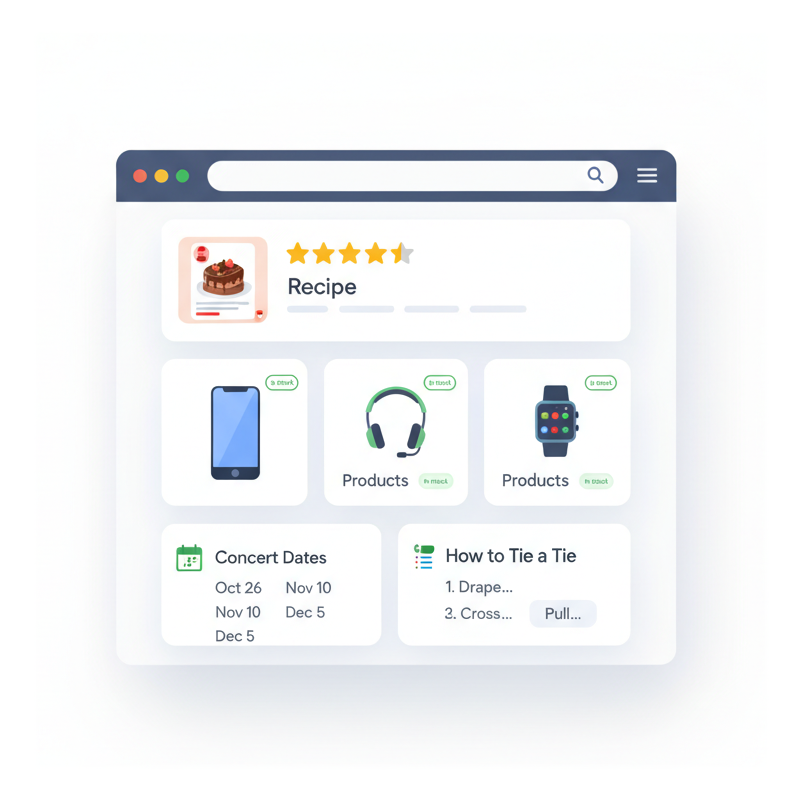
 Search visibility is no longer just about ranking on search engines. It has become about how your website appears, how much information it displays to users, and how easily search engines understand your content. Modern search results are dynamic and informative, and one of the main reasons behind this transformation is the use of rich results. When you build websites with rich results, you give your content a powerful advantage that can significantly increase engagement, improve user experience, and strengthen conversion potential.
This complete guide explains how rich results work, why they matter, and how you can implement them to boost visibility and authority. You will learn how structured data works, the types of rich results supported by Google, common mistakes to avoid, the benefits of rich results for your website, and the best practices required for long term SEO success.
Understanding Rich Results and Why They Matter
 Rich results are enhanced search listings that appear on search engine results pages. They show additional information that standard search results do not include. Instead of a simple blue link with a short meta description, rich results may display ratings, images, product prices, availability, recipe instructions, frequently asked questions, and more. When you build websites for rich results, you make it easier for search engines to extract meaningful information that enhances your visibility.
People often assume that rankings alone determine traffic, but this is not entirely true. The way your page appears in the search results plays a major role. A listing that
- includes star ratings has a much stronger appeal than a plain title.
- displays product availability attracts ready to buy users.
- includes quick answers encourages instant engagement.
For example, a standard result might simply show
“Best Online Marketing Strategies for 2025.”
A rich result could display
“Best Online Marketing Strategies for 2025 with detailed insights, tips, practical examples, and step by step guidance.”
This expanded visibility increases the likelihood of clicks. Users naturally gravitate toward information rich search results because they look trustworthy and complete. This is why the long tailed keyword build websites with rich results for better visibility has become a popular search term among business owners and developers.
The Benefits of Rich Results for Your Website
Building websites with rich results offers a wide range of benefits that directly impact your online presence. One of the biggest advantages is improved click through rate. When users see more information such as reviews, prices, or FAQs, they feel more confident and are more likely to click. This does not require higher rankings. Even if your page appears below competitors, a richer display often performs better.
Another major benefit is improved understanding of your content. Search engines rely on structured data to process information. When you provide clear and organized data, search engines categorize your pages more accurately. This increases the chances of appearing for the right keywords including long tailed keywords such as how to optimize websites for rich results or best structured data practices for rich results.
Rich results also build credibility. Users trust websites that display verified ratings, author names, review summaries, or event schedules in their search listings. These visual cues indicate reliability and help establish brand authority. If you run an ecommerce website, rich results make your product listings more compelling. If you run a blog, rich results make your articles look more informative. If you run a local business, rich results help customers find your contact details quickly.
Finally, rich results support voice search and artificial intelligence powered search experiences. As more users rely on voice assistants, structured data becomes essential because voice search systems need clear definitions of information. By designing your website for rich results, you prepare your content for the next generation of search technology.
How Rich Results Work: The Role of Structured Data
Rich results depend on structured data. Structured data is a standardized language that search engines use to understand what your content represents. While normal website content is written for humans, structured data is written specifically for machines. When a search engine reads your page, it uses structured data to identify the type of content, the important attributes, and the exact meaning behind each element.
Structured data is implemented using Schema vocabulary. Developers most commonly use JSON LD, which is a script placed inside the website code. The script helps define elements such as titles, authors, recipes, events, products, or reviews. Once Google detects valid structured data, it may choose to display rich results for the page.
For example, a structured data snippet for a recipe might include fields for ingredients, preparation time, calories, and cooking instructions. A structured data snippet for a product might include fields such as price, availability, rating, and brand name.
A simple example of structured data in JSON LD format might look like this:
“
{
"@context": "https://schema.org

"@type": "Product",
"name": "Premium Stainless Steel Bottle",
"image": "https://example.com/bottle.jpg
"description": "Durable stainless steel water bottle with thermal insulation",
"brand": "Pure Hydrate",
"offers": {
"@type": "Offer",
"price": "799",
"priceCurrency": "INR",
"availability": "InStock"
}
}
”
This example tells Google exactly what the product is and helps trigger a rich result for product listings.
Structured data is the foundation of every rich result. Without it, search engines cannot produce enhanced listings. This is why the keyword structured data for rich results is essential for any business that wants to maximize search visibility.
Supported Rich Result Types by Google
Google supports several rich result types, each designed for different purposes. Understanding these categories helps you determine which ones match your website goals.
Articles are among the most common types. When you use structured data for articles, Google can display images, author names, publication dates, and sometimes even quick summaries. This helps your content stand out in competitive niches where multiple blogs target the same audience.
Product rich results are extremely valuable for ecommerce websites. These results show price, stock status, rating, and review count. They help customers make decisions faster. People searching for products often click listings that already show detailed information. The long tailed keyword product rich results for ecommerce websites has gained strong search volume due to this trend.
FAQ rich results are also popular, especially for service websites. Pages with FAQ structured data display expandable questions and answers directly within search results. This improves user satisfaction and helps drive more traffic.
For example,
“What is the cost of digital marketing services”
and
“How long does it take to see results from SEO”
“How to” in rich results provide step by step instructions for completing tasks. They are ideal for tutorials, household guides, cooking instructions, and technical walkthroughs. These results are visually appealing and attract users who prefer quick guidance.
Review rich results highlight star ratings, which strongly influence decision making. Businesses with higher ratings typically attract more clicks. Reviews create instant trust and credibility, making them extremely important for ecommerce, local services, and educational platforms.
Local business rich results help companies display essential information such as business name, address, phone number, and service area. When someone searches for services near their location, these details help your business get discovered more easily.
Event rich results allow businesses to display event dates, timings, and locations. These are helpful for workshops, concerts, conferences, and seminars.
There are many more supported types, but the essential idea is to choose structured data types that align with your content rather than using every available option.
| Rich Result Type | Description | Eligibility Requirements |
|---|
| Article | Displays article titles, images, and publisher info for news/blogs. | Use Article schema; include headline, image (>130px), datePublished. |
| Breadcrumb | Shows site navigation hierarchy (e.g., Home > Category > Page). | BreadcrumbList schema; valid position list, no loops. |
| Carousel | Sequential gallery of items (e.g., recipes or movies) from one site. | Combine with Recipe, Course, Restaurant, or Movie; 5-16 items. |
| Course | Lists educational courses with titles, providers, and descriptions. | Course schema; provider name, description. |
| Dataset | Highlights large datasets in Google Dataset Search. | Dataset schema; distribution format, license. |
| Event | Interactive listings for events like concerts with dates, locations. | Event schema; startDate, location (or OnlineEvent), image. |
| FAQ | Expandable question-answer pairs on FAQ pages. | FAQPage schema; 3-8 questions, each with a short answer. |
| Job Posting | Job details with salary, location, and employer ratings. | JobPosting schema; title, description, hiringOrganization, datePosted. |
| Local Business | Business info in knowledge panels, including hours and directions. | LocalBusiness schema; address, geo coordinates, openingHours. |
| Product | E-commerce enhancements like price, availability, and reviews. | Product schema; name, image, offers (price, availability). |
| Recipe | Recipe cards with ingredients, prep time, and calories. | Recipe schema; name, ingredients list, cookTime, nutrition. |
| Review Snippet | Star ratings and excerpts for products, books, or businesses. | Review schema; reviewRating (scale 1-5), author. |
| Video | Thumbnails, durations, and transcripts for video content. | VideoObject schema; name, thumbnailUrl, duration, uploadDate. |
Tools for Testing and Validation
Before your structured data can produce rich results, it must be validated. Even small errors can prevent Google from reading it correctly. This is where testing tools become important. These tools help ensure that your structured data follows the correct format and includes required fields.
One of the most widely used tools is the Google Rich Results Test. This tool allows you to enter your website URL and check if your page is eligible for rich results. It highlights valid fields and marks incomplete or incorrect parts. If the tool shows a message like
“Page is eligible for rich results,”
you know your structured data is functioning as intended.
Another tool is the Schema Markup Validator. It checks the syntax of your structured data and ensures your JSON LD code is correctly formed. You may see an output such as
“No syntax errors detected for provided schema.”
Google Search Console also helps monitor your structured data. It shows which pages are indexed with rich results, which ones contain errors, and which ones have warnings. Search Console helps track performance metrics related to impressions and clicks. Many developers check these reports regularly to ensure ongoing compliance.
Using these tools is essential because structured data must be accurate and complete. Even one missing property can cause Google to ignore your markup. This is why the keyword structured data testing tools for rich results has become important for SEO professionals and website developers.
Common Mistakes to Avoid
Many websites fail to generate rich results because of improper implementation. One of the most common mistakes is adding structured data that does not match visible content. If your page does not show ratings but your structured data includes ratings, Google may penalize your page. The information in structured data must always reflect the content users can see.
Another mistake is using incomplete markup. Some structured data types require mandatory fields. If these fields are missing, Google will ignore the entire block of structured data. It is important to review documentation carefully to ensure every required property is included.
Some websites use multiple plugins that generate overlapping structured data. This creates duplication and confusion. When Google sees conflicting information, it may choose not to display rich results at all. Clean and organized implementation is always best.
Another issue is overuse of structured data. Developers sometimes apply schema markup to irrelevant pages. For example, applying product schema to a blog post or FAQ schema to a contact page. This reduces quality and can cause indexing issues.
Finally, not updating structured data regularly is a major mistake. If product availability or pricing changes, your structured data must be updated immediately. Outdated data can mislead users and hurt your credibility.
Best Practices and Tips
To successfully build websites with rich results, focus on long term quality rather than shortcuts. Always use JSON LD format for structured data since Google recommends it and processes it efficiently. Keep your structured data simple, clean, and free from unnecessary values. Match structured data with visible page content at all times.
Make sure you review Google guidelines frequently. Google occasionally updates its requirements for rich results, and your website must remain compliant. Always test your structured data before publishing it. Ensure your website uses long tailed keywords naturally within the content such as how to build websites that get rich results in Google or rich result optimization techniques for business websites. These keywords help align your content with user intent.
Update structured data whenever your website content changes. This is especially important for products, events, or local business information. Fresh data improves trust and accuracy.
Monitor your performance using Google Search Console. If your impressions drop or errors appear, address them quickly. Maintaining consistency leads to long term benefits.
Most importantly, create high quality content. Rich results amplify your website, but they do not replace the need for valuable content. When your content is helpful, relevant, and user friendly, structured data enhances it even further.
Practical Examples of Rich Results

To understand rich results better, here are simple examples in quotes.
A rich result for a recipe might show
“Chocolate Cake Recipe with a preparation time of thirty minutes, eight ingredients, and a full step by step baking process.”
A rich result for a product might show
“Latest Bluetooth speaker priced at one thousand five hundred rupees with free delivery and a rating of four point eight stars.”
A rich result for a frequently asked question section might show
“What is the price of professional website design services”
and
“How long does it take to build a fully optimized website.”
These examples illustrate how rich results instantly help users get essential information.
Frequently Asked Questions
What are rich results in simple terms
Rich results are enhanced search listings that display extra information such as ratings, images, FAQs, or prices. They make your website more appealing in search engines and help increase click through rate.
Do rich results improve search rankings
Rich results do not directly improve rankings, but they improve visibility and user engagement, which indirectly strengthens your SEO performance.
Do I need coding skills to implement structured data
You do not always need coding skills. Many platforms and plugins allow you to generate structured data without manual coding. However, basic understanding of JSON LD is helpful.
Why is structured data important for SEO
Structured data helps search engines understand your content clearly. When search engines understand your content better, they can display more informative results.
How long does it take for Google to show rich results
It depends on crawling and indexing frequency. Some pages may show rich results within hours while others may take several days.
Can every page qualify for rich results
Not all pages qualify. Only pages that follow Google guidelines and include supported schema types can get rich results.
Do rich results appear on all devices
Most rich results appear on both desktop and mobile devices. Some special formats may be limited to specific devices depending on Google updates.
Conclusion: Elevate Your Site Today
If you want a website that not only looks professional but also performs exceptionally well in search engines, Shriasys can help you build fully optimized websites with rich results. Our team specializes in structured data implementation, website optimization, and modern SEO strategies that enhance visibility and user engagement. Whether you need an ecommerce website, a business website, or a content driven platform, Shriasys ensures your website is ready for search engines and real world customers. Contact Shriasys today to transform your website into a powerful presence that stands out with rich results and delivers measurable growth.